In progress / prototypingPassion project / mechatronics prototype

Sensor-Activated Robotic Arm

Currently designing and prototyping a 3 DoF sensor-triggered robotic-arm. Design challenges include end effector accuracy, weight distribution, and lowering torque demanded on servos. Iterations are implemented via Fusion 360 and VSCode.

  • Working on the end effector accuracy and CAD redesign.

V1 → V3 Timeline

V1, DETAIL
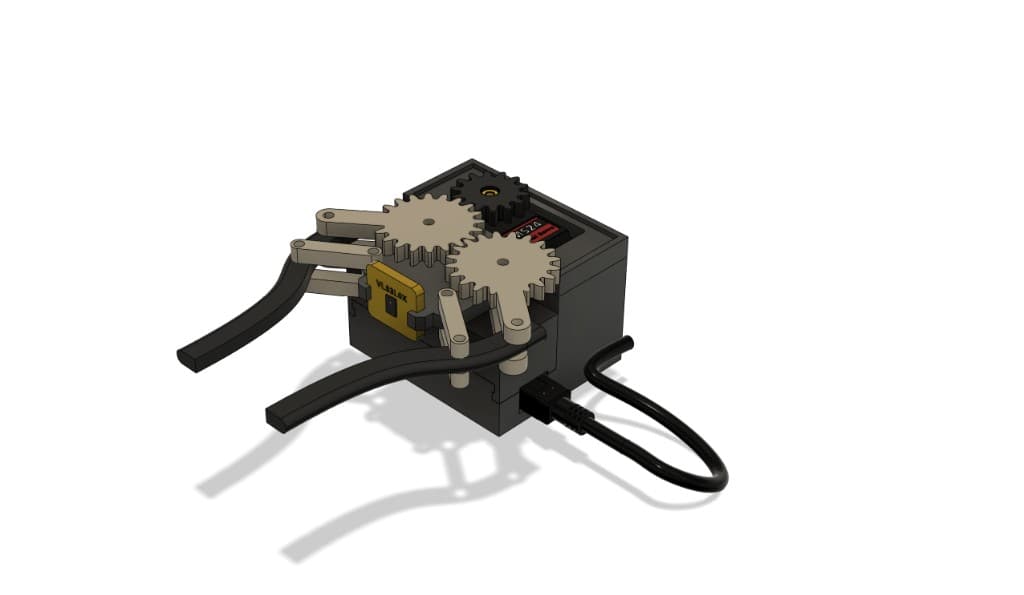
V1 gripper CAD render, assembled front view
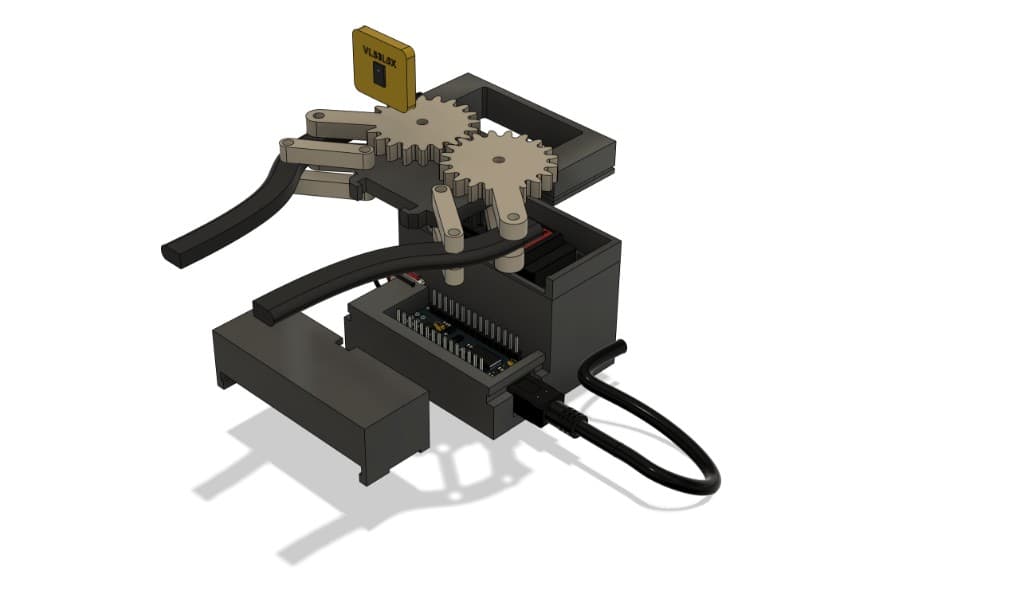
V1 gripper exploded view with Arduino Nano and gear train
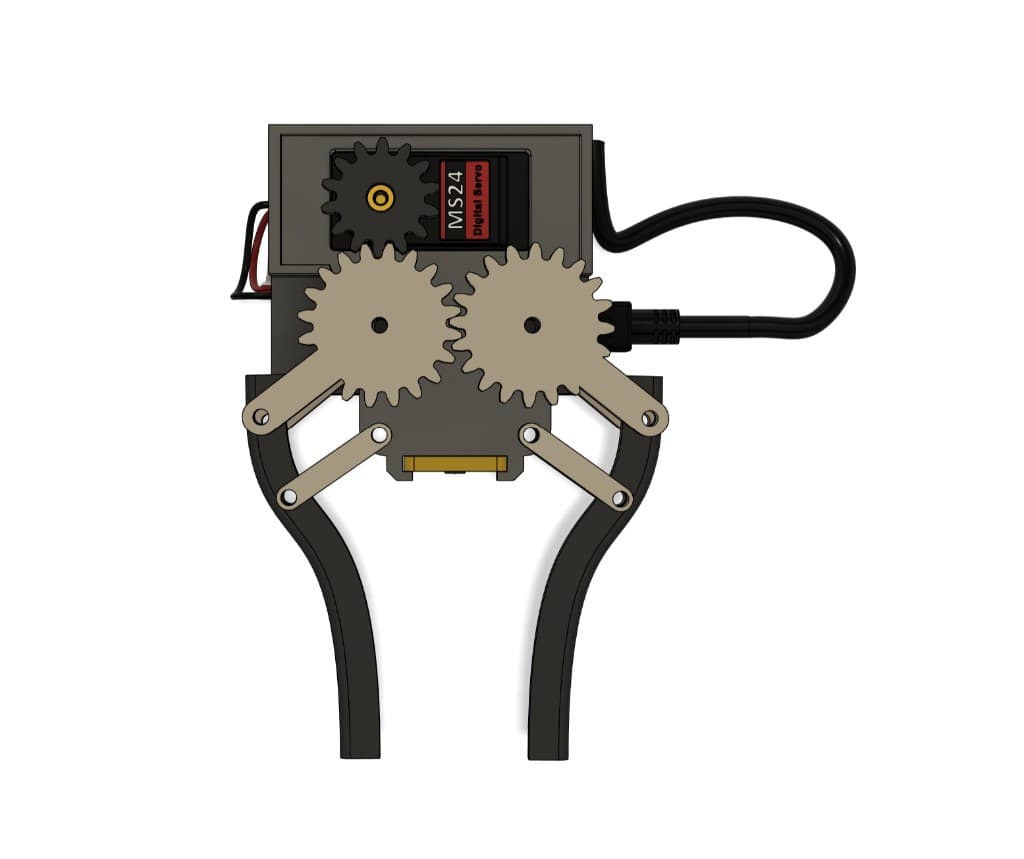
V1 gripper top-down view with MS24 servo and gear linkage
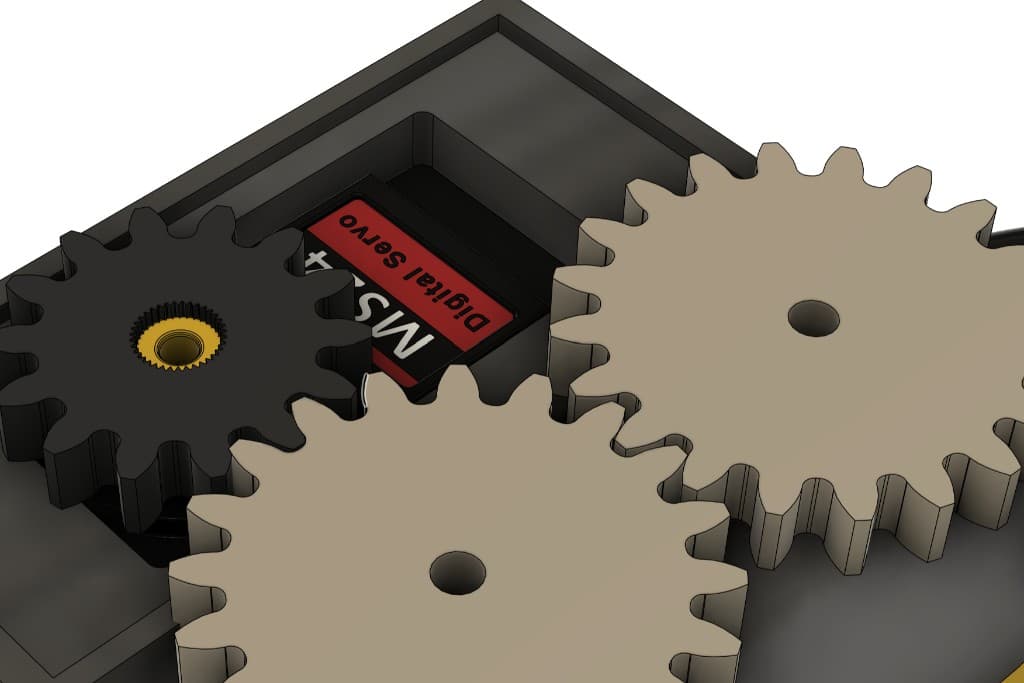
V1 gripper gear train close-up with MS24 digital servo
  • Used MS24 servo for initial actuation
  • First functional/prototype end-effector
  • Proved basic grabbing concept
  • Exposed weight, motion accuracy, and fit/tolerance issues
Servo
MS24, high torque, heavy for the assembly
End effector
First functional gripper, proved concept
Sensor
VL6180X ToF, proximity-triggered actuation
Main issue
Weight, accuracy, and fit/tolerance failures

Next development focus

IN PROGRESS
  • Print and assemble the V3 arm and end effector for bench testing
  • Validate RDS3225 torque and joint clearance under load
  • Tune VL53L0X proximity thresholds for reliable grip triggers
  • Iterate jaw geometry and linkage tolerances after first print

Visual Creation Journey

VID.01, GRIPPER TEST

CAD + Fabrication

  • Fusion 360 used for arm geometry, end-effector design, and print-ready exports
  • PLA 3D printing for functional prototype parts
  • Cardboard and styrofoam for fast early-form exploration before committing to prints
  • CAD → prototype → test → redesign loop to resolve geometry, printability, and assembly issues
  • Iterating on joint clearance, clip dimensions, and material use between versions

Embedded Control + Sensor Integration

  • PlatformIO / VS Code workflow for firmware development and upload
  • C / Arduino-style embedded code for servo actuation and sensor reads
  • VL6180X ToF sensor input for proximity-triggered end-effector behavior
  • Debugging across library compatibility, upload failures, sensor detection, and serial monitor output
  • Touch input integrated as an additional control signal during prototyping